Contributed by: BreeS, FreeTaxUSA Agent

Why do you need to know the land value of a real property asset?
If you use real property such as a building for an income-producing purpose, and the building qualifies as a depreciable asset, you must separate the cost of the land from the cost of the building. The IRS doesn’t consider land a depreciable asset.
You must allocate the property’s cost between the land and the building, so the land portion isn’t included in your depreciable basis. Once the land value is determined, it'll be subtracted from the total property value and the amount allocated to the building can be depreciated, according to the applicable tax rules.
Example:
You paid $300,000 for a rental property. A reasonable allocation shows that the land represents 20% of the property’s total value. You’d allocate $60,000 to land and $240,000 to the building. The $60,000 land portion isn’t depreciable; the $240,000 building portion may be depreciated, subject to any other basis adjustments.
How to determine the land value
It’s important to determine the land and building values as of the date you purchased the property. The value of the land must specifically relate to the total value of the building that you include as a depreciable asset. Keep records showing the source of the values and how you calculated the allocation.
If your purchase price includes both land and a building, apply the allocation to the property’s total basis, including eligible purchase costs. Costs that apply only to the land are generally added to the land basis, while costs that apply only to the building are typically added to the building basis.
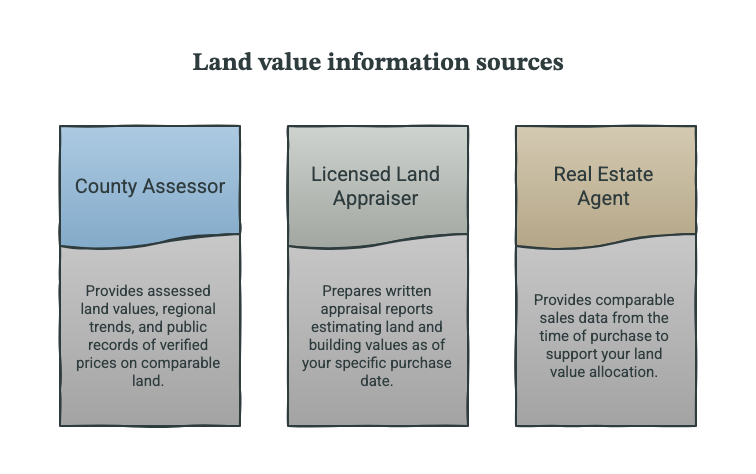
Where to find land value information
- County Assessor - Contact your local county assessor for records that show the assessed land value, or an assessment of value based on regional trends. If your county assessor can generate this assessment, it’s likely to be the most accurate figure. Their office may also have public records available where you can check for verified prices on comparable land. You typically want to keep the search for comparable land within a year or two around the date of purchase.
Because assessed values may differ from market values, use them as a reasonable basis for allocating your cost rather than assuming the land’s assessed value is its exact purchase-date value.
- Licensed Land Appraiser - This can get complicated if the purchase of the property was several years ago, but you might get lucky finding a licensed real estate appraiser that has records of land values and land trends. They can prepare an appraisal that estimates the land and building value as of your purchase date. Ask the appraiser for a written report and keep it with your tax records.
- Real Estate Agent - A local real estate agent who’s familiar with land sales may be able to provide comparable sales from around the time you purchased the property. This information can support your allocation, especially when other records are limited. Ask for the comparable properties and the date range used and keep the information with your tax records.
Conclusion
Finding the land value of real property and allocating your land and building portions is an essential step in properly depreciating an asset since land can’t be depreciated. There are a few options to utilize to accurately determine the land value.