Contributed by: TaylorC, FreeTaxUSA Agent

Saving for retirement is a great goal, whether you have a retirement plan through work, an IRA you opened yourself, or both.
But how do you know how much you can contribute? The IRS sets yearly limits for retirement accounts. Your income, age, and account type can also affect how much you're allowed to contribute each year.
Two common retirement accounts we’ll cover in this article are:
- Traditional IRA or Roth IRA: You open these accounts yourself through a bank or financial institution. To make qualified contributions, you need eligible income from working.
- Traditional 401(k) or Roth 401(k): These accounts are offered through your employer. You contribute money from your paycheck if you’re eligible for the plan.
You may be able to contribute to both in the same year. IRA and 401(k) contributions have separate yearly limits.
💡 Note: A Roth IRA and Roth 401(k) aren’t the same. Roth IRAs have income limits, but Roth 401(k)s don’t have those same income limits.

How much can I contribute to an IRA?
The IRS sets a yearly limit on how much you can contribute to traditional and Roth IRAs combined.
For 2026, the limits are:

You must also have enough taxable compensation, such as wages, tips, or income from self-employment to cover your contribution. Special rules may allow you to contribute based on your spouse's income if you file a joint return.
For example, if you're under 50 and earn $4,000 from working, you can contribute up to $4,000 to your IRAs, not the full $7,500.
If you have both a traditional IRA and a Roth IRA, your contributions share the same yearly limit. This means the total contributions to both accounts cannot exceed your earned income or the yearly IRA contribution limit.
What's the difference between traditional and Roth IRAs?
- Traditional IRA: You may be able to deduct your contributions on your tax return. Your income and whether you or your spouse have a retirement plan at work can affect your deduction. Your earnings grow tax-deferred, but distributions are generally taxable.
- Roth IRA: You don’t deduct your contributions, and your income determines whether you can contribute. Your earnings grow tax-free as long as you meet the requirements for qualified distributions, which are completely tax-free.
For a Roth IRA, your modified adjusted gross income (MAGI) may limit how much you can contribute or entirely disqualify you. MAGI is based on your income with certain tax adjustments.
For 2026, your Roth IRA contribution begins to decrease when your MAGI reaches $153,000 if you're single or head of household, or $242,000 if you're married filing jointly. Other limits apply to married taxpayers filing separately.
You can check the current income limits and contribution rules in IRS Publication 590-A.
How much can I contribute to a 401(k)?
If your employer offers a 401(k), you can contribute through payroll withholdings.
For 2026, the employee contribution limits for most traditional and Roth 401(k) plans are:
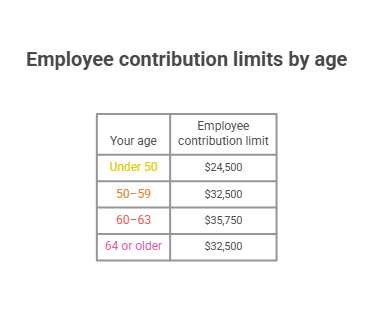
If you're age 50 or older, your plan may allow extra catch-up contributions. Some high compensation employees must make these contributions on a Roth basis starting in 2026. Check with your plan administrator to see which rules apply to you.
If you contribute to both a traditional 401(k) and a Roth 401(k), your total yearly contributions share the same employee limit.
Your employer's matching contributions don't count toward this employee limit, but separate limits apply to total contributions.
You can find your 401(k) contributions in Box 12 of your Form W-2.
💡 Note: Your employer’s plan may have additional rules that limit how much you can contribute. Ask your plan administrator which limits apply to you.
How can I avoid contributing too much?
Before adding money to a retirement account, check these 5 things:
- Know your yearly limit. Retirement contribution limits can change each year. Check the IRS retirement contributions for the tax year you are in.
- Add up your IRA contributions. If you have more than one IRA, add up contributions to all of them.
- Check your income. Make sure you have enough taxable compensation to contribute to an IRA. If you have a Roth IRA, check whether your MAGI affects your limit. If you have a traditional IRA, check whether your income and workplace retirement plan coverage affect your tax deduction.
- Track contributions from different jobs. If you change employers, or have more than one employer, your combined 401(k) contributions are still subject to the same yearly employee limit.
- Review your contributions after major changes. A raise, bonus, or change in filing status could affect how much you’re allowed to contribute to a Roth IRA.
Keeping track throughout the year can help you avoid surprises when it's time to file your taxes.
If you're unsure how these rules apply to your income or retirement accounts, consult a tax professional.
What if I contributed too much?
If you've contributed more than the IRS allows, don't ignore it. You will need to correct the excess contribution to avoid extra taxes.
For IRAs, an excess contribution can result in a 6% excise tax for each year the excess remains uncorrected, subject to IRS rules. Correcting the excess by the applicable deadline may help you avoid this tax.
Start by contacting your IRA provider or workplace plan administrator. They can help you understand your correction options.
For more help, see these FreeTaxUSA Community articles:
The bottom line: You may be able to contribute to more than one retirement account, but each account has rules and limits. Checking those limits before contributing can help you save for retirement without unexpected tax problems.